
El Niño has formed: NOAA confirms the return of this climate phenomenon
· Telemundo McAllen (KTLM)
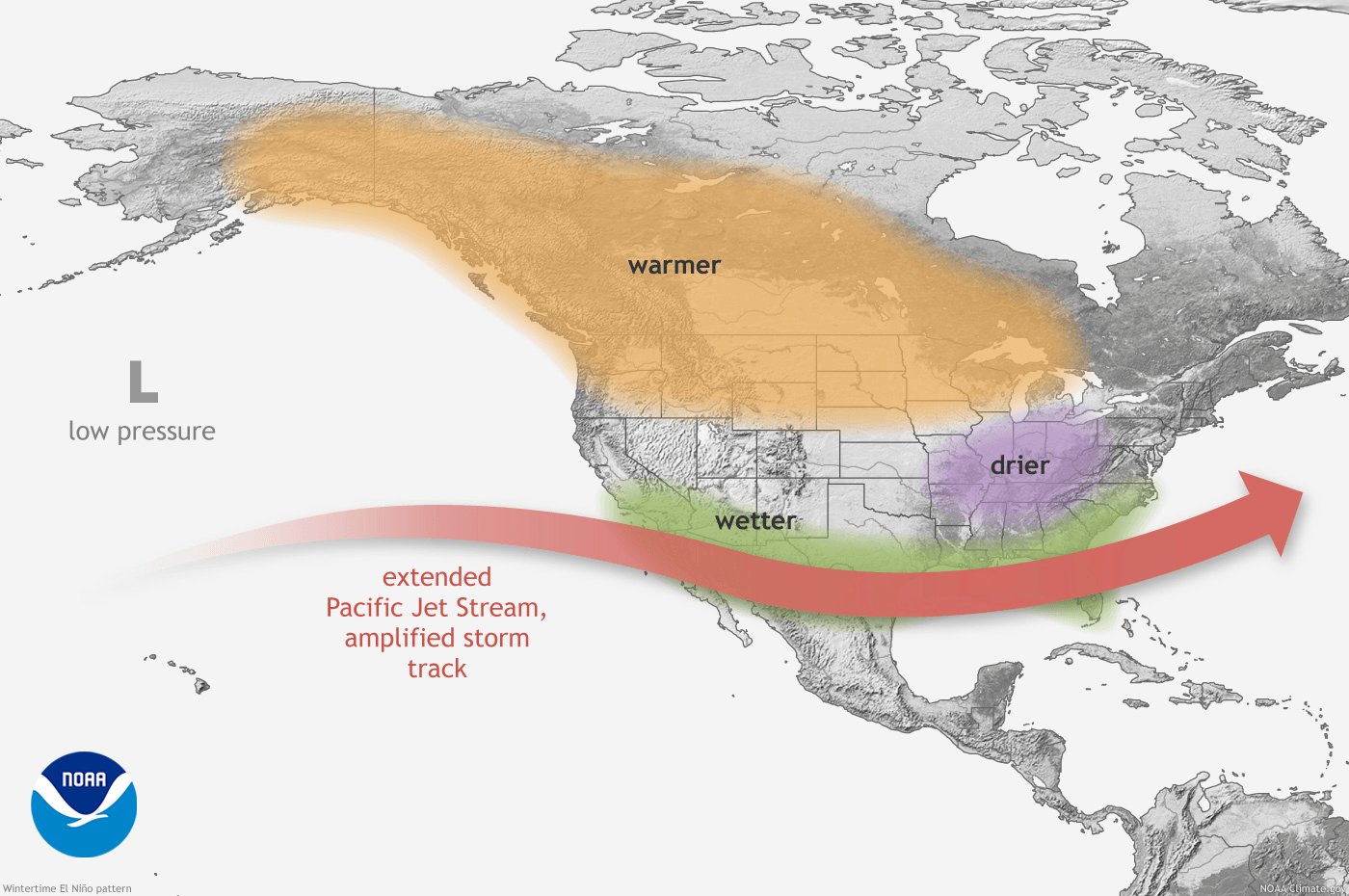
The National Oceanic and Atmospheric Administration (NOAA) announced on Thursday that the climate phenomenon El Niño has officially formed in the tropical Pacific Ocean. The meteorological agency issued a warning about the possibility that it could reach moderate, strong, or even very strong intensity in the coming months. According to meteorologists, there is a 63% chance that sea surface temperatures in the monitored region of the Pacific will exceed 2 degrees Celsius above average, a threshold that NOAA uses to classify an event as a 'very strong' El Niño. El Niño is the warm phase of the El Niño-Southern Oscillation (ENSO) phenomenon. It occurs when temperatures in the equatorial Pacific remain at least 0.5 degrees Celsius above average for several consecutive months, disrupting the atmospheric pattern known as the Walker circulation, which normally moves air from west to east across the ocean. While each El Niño episode has its unique characteristics, NOAA explained that this phenomenon typically reaches its peak intensity during the winter months in the Northern Hemisphere. Common effects include a warmer-than-normal winter in much of the northern United States, increased storm activity in the southern United States with higher chances of rain and snow, reduced cyclonic activity in the Atlantic due to increased upper-atmosphere winds, heightened tropical activity in the eastern and central Pacific, increased risk of coastal flooding associated with high tides in some regions, and disruptions in marine ecosystems and the migratory patterns of fish and other ocean species. 'Each El Niño is different; each has its own signature on weather patterns,' said Ken Graham, director of NOAA's National Weather Service. The agency also reported that it has officially begun using a new index known as the Relative Oceanic Niño Index (RONI) to monitor and forecast El Niño and La Niña events. According to NOAA, this new method provides a more accurate measurement of ocean temperature anomalies and has shown better correlation with atmospheric changes associated with these climate phenomena. Experts will continue to monitor the evolution of El Niño over the coming months to determine the magnitude of its global effects.
AI summary · Source: Telemundo McAllen (KTLM) →


