US Records More Measles Cases in 2026 Than in All of 2025
· Telemundo McAllen (KTLM)
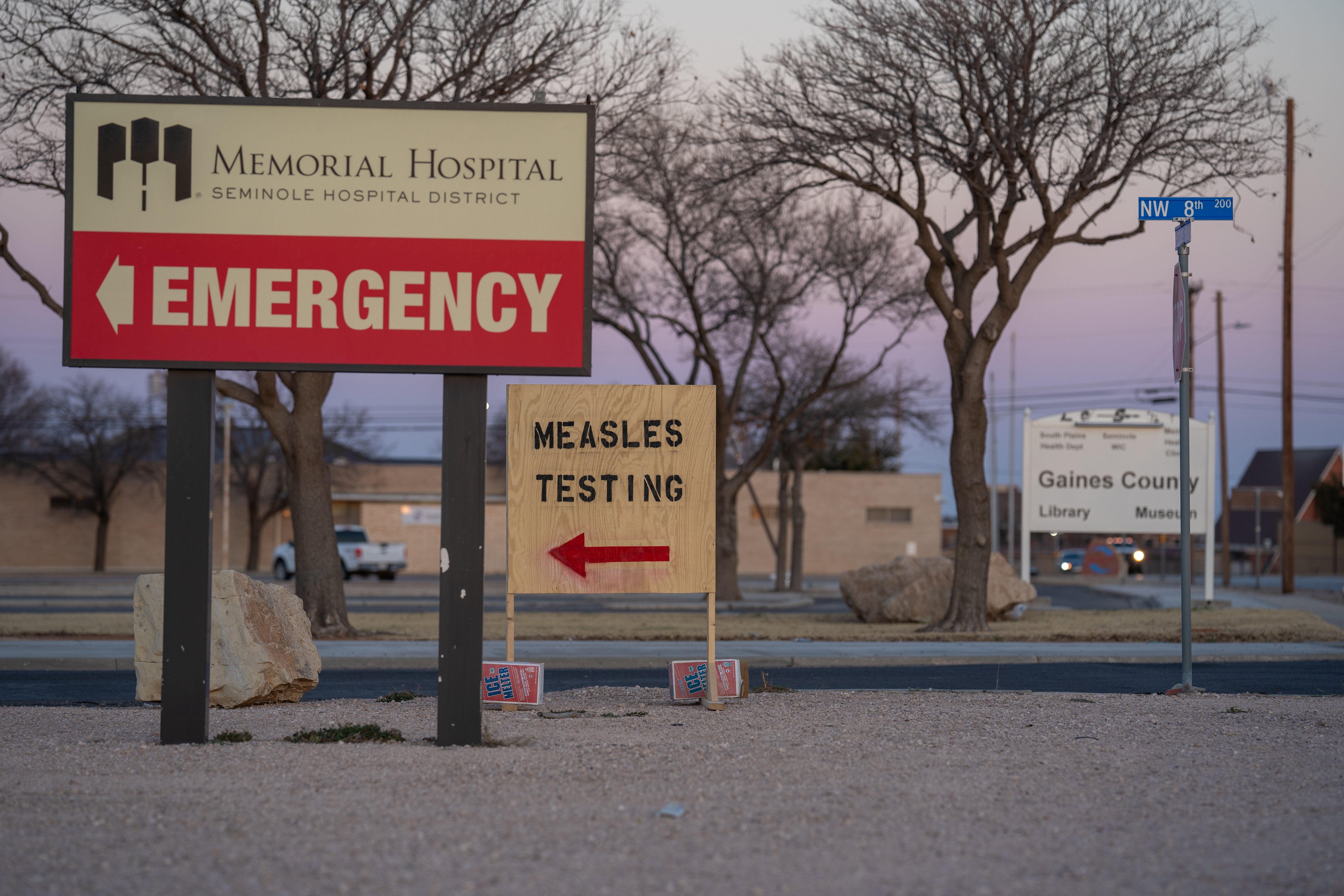
The number of measles cases in the United States has already surpassed the record total recorded for all of 2025, with five months remaining in 2026. The Centers for Disease Control and Prevention (CDC) reported 2,318 cases of measles as of Thursday, according to an agency update released on Friday. The country recorded 2,289 cases in 2025, the worst year for measles in over three decades. Now, 2026 has easily become the worst year for measles in the U.S. since 1991, due to large outbreaks in South Carolina, Utah, and Arizona that have sickened hundreds, along with smaller clusters of cases in other states. In November, international health authorities will meet to determine if the U.S. and Mexico have lost their status as measles-free countries. The U.S. eliminated local transmission of measles in 2000 by maintaining high vaccination rates, which have recently fallen below the 95% coverage needed to prevent outbreaks. Experts believe that the actual spread of the virus may be underestimated, as some individuals become ill without seeking medical attention, a situation not unique to measles. Additionally, vaccination rates have declined nationwide, with rates for measles, mumps, and rubella dropping to 92.5% among kindergarten children for the 2024-25 school year, down from 95.2% in 2019-2020, concealing even lower rates in certain communities. In Utah, where public health officials have been combating measles for over a year, the virus has sickened more than 700 people during that time, according to the state health department. Experts using mathematical models and genetic analysis suggest that a large outbreak on the Utah-Arizona border could be three to four times larger than currently known, according to state epidemiologist Dr. Leisha Nolen. The situation is even more uncertain in South Carolina, which experienced the largest outbreak in the country in 35 years, with a total of 997 cases likely being an underestimate, according to the state health department. Dr. Brannon Traxler, interim director of the state health department, stated that the extent of underreporting is “impossible to know and may vary throughout an outbreak.” Gaps in data can hinder reliable estimates of the true scope of an outbreak. Experts say hospitalization rates can be a good indicator, but measles hospitalizations are not mandated to be reported in all states. In Texas, researchers are still working to estimate the size of the state's 2025 outbreak, with preliminary findings suggesting it could have been nearly double the known 762 cases. Rémy Pasco, a mathematical epidemiologist at the University of Colorado Boulder, noted that underestimations do not surprise him. In the absence of adequate community vaccination rates—95%, according to health experts—“there is not much that can be done against measles once you have it,” he stated. The CDC defines an outbreak as three or more linked cases. However, by the time three such cases are identified in communities with low vaccination and less disease surveillance, “either you missed the previous cases or you’re going to have many more,” he added. Dr. Varun Shetty, Texas's chief state epidemiologist, mentioned instances where individuals tested positive for measles, but health authorities could not confirm who else lived in that person's household or if they were ill. “What we can count and report is almost always an underestimate of what actually occurred, because it depends on people being willing to get tested and share information with health providers and public health,” Shetty said. “Sometimes that simply does not happen.” The state health department previously reported that 182 probable measles cases went unconfirmed in March 2025 among minors in Gaines County—the epicenter of the outbreak—due to a lack of information. The confirmed case count in that west Texas county during the entire outbreak is 414. Shetty expects to continue seeing measles cases and even outbreaks, as many people remain unprotected. “It is really crucial, not just for individuals, but also for communities, to have high vaccination coverage,” he said. Dr. Mark Roberts, former director of the Public Health Dynamics Lab at the University of Pittsburgh's School of Public Health, is particularly concerned about what he calls “innocent bystanders.” Research and measles models from his team show that those unable to be vaccinated—very young infants, people with weakened immune systems, and those who, on rare occasions, do not develop strong immunity from the vaccine—bear the brunt of outbreaks early on. Some people view skipping vaccination as akin to deciding not to wear a seatbelt in a car, Roberts said. “Not vaccinating your child is like saying, ‘I don’t want my car to have brakes,’” he said. “Because you can crash into other people. You’re not alone in your car. There are other people.”
AI summary · Source: Telemundo McAllen (KTLM) →