Towards Private Education? Scholarships Encourage Students to Leave Public Schools
· Telemundo McAllen (KTLM)
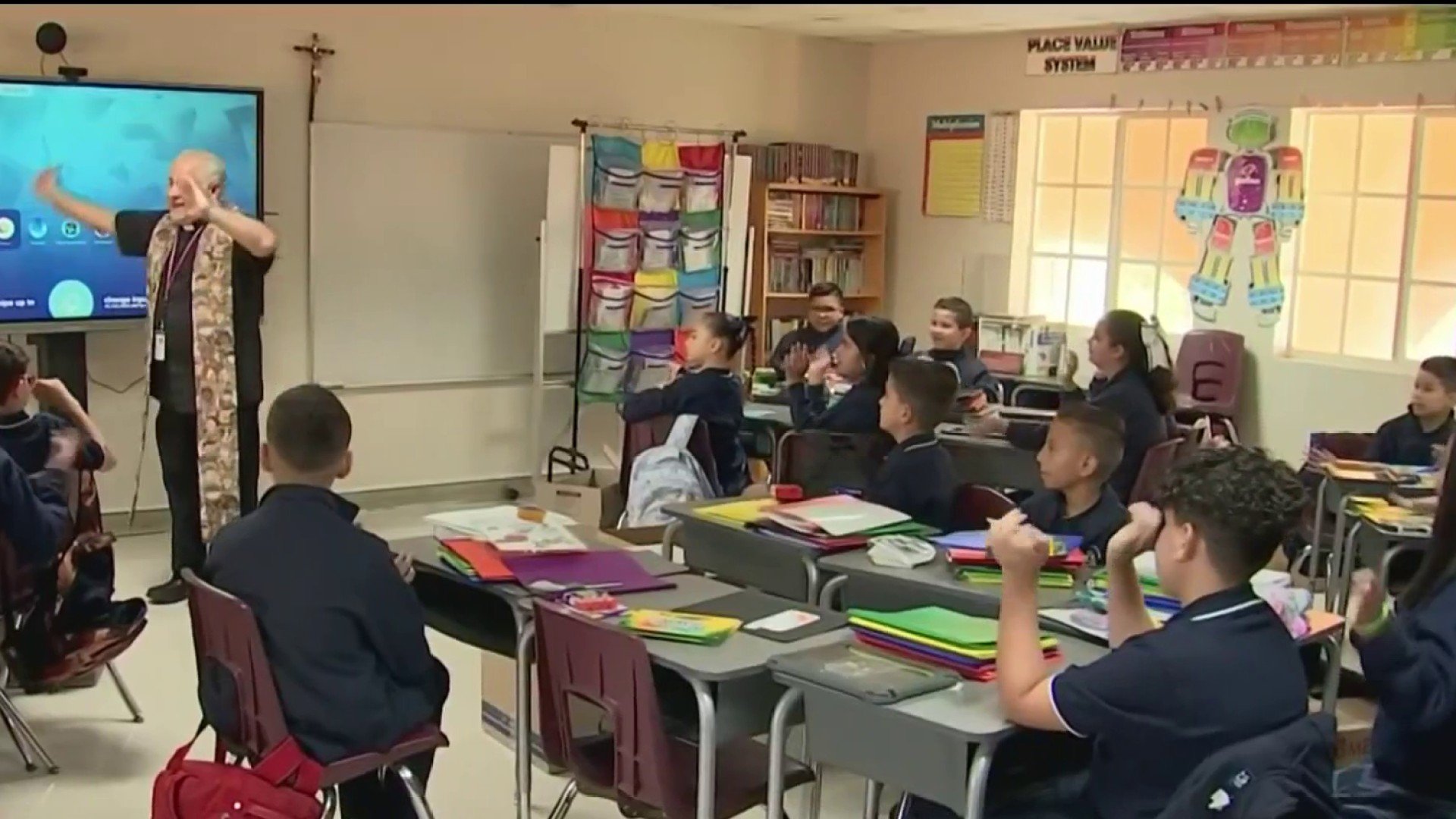
The visit to the Catholic school ended, and María Contreras felt an irresistible urge to enroll her 7-year-old son there. But first, a difficult question: 'Could my son be expelled?' she asked the principal in Spanish. The second grader has trouble concentrating, doesn't listen to teachers, and runs around the classroom, she explained. More and more families across the United States are experimenting with private schools as states—and soon the federal government—use tax-funded scholarships to encourage them to leave public schools. Soon, half of American students will be eligible to apply for state funds to finance a private education, with many states offering scholarships even to high-income families. In theory, these programs should provide children with educational opportunities they would not otherwise have. In reality, students already attending private schools or receiving homeschooling are the ones most likely to benefit, according to an analysis by The Associated Press. The reasons are complex. In some cases, families with children in public schools are unaware of these scholarship programs, known as vouchers or education savings accounts. They may lack transportation to take their children to private school. Some worry that their child won't adapt to a stricter disciplinary environment. Sometimes, as is the case in Texas—the most recent state to join the private school choice movement, which already has $10.5 billion—the law is written to benefit families who know how to navigate complex educational systems. Contreras and her husband grew up in a Catholic family in Mexico. They moved to Texas, where he found work as a welder, and eventually obtained their green cards. They were relatively happy sending their three older children to public schools in Fort Worth. However, their youngest son, Ian, faced several challenges. He was reading well below the expected level for his age. In the fall, Contreras asked Ian's teacher to test him for possible learning difficulties, unaware that there was a legally mandated process to request that evaluation. For months, no one assessed her son. And she was not alone. At her son's elementary school—where almost all students come from low-income families, and most are still learning English—learning difficulties have been diagnosed at a surprisingly low rate. Only 4% qualify for special education services, compared to 14% district-wide. Contreras didn't know it then, but without those tests, she would have few options to pay for a new school for Ian.
AI summary · Source: Telemundo McAllen (KTLM) →