Trump Cancels U.S. Delegation to Pakistan for Talks with Iran
· Telemundo McAllen (KTLM)
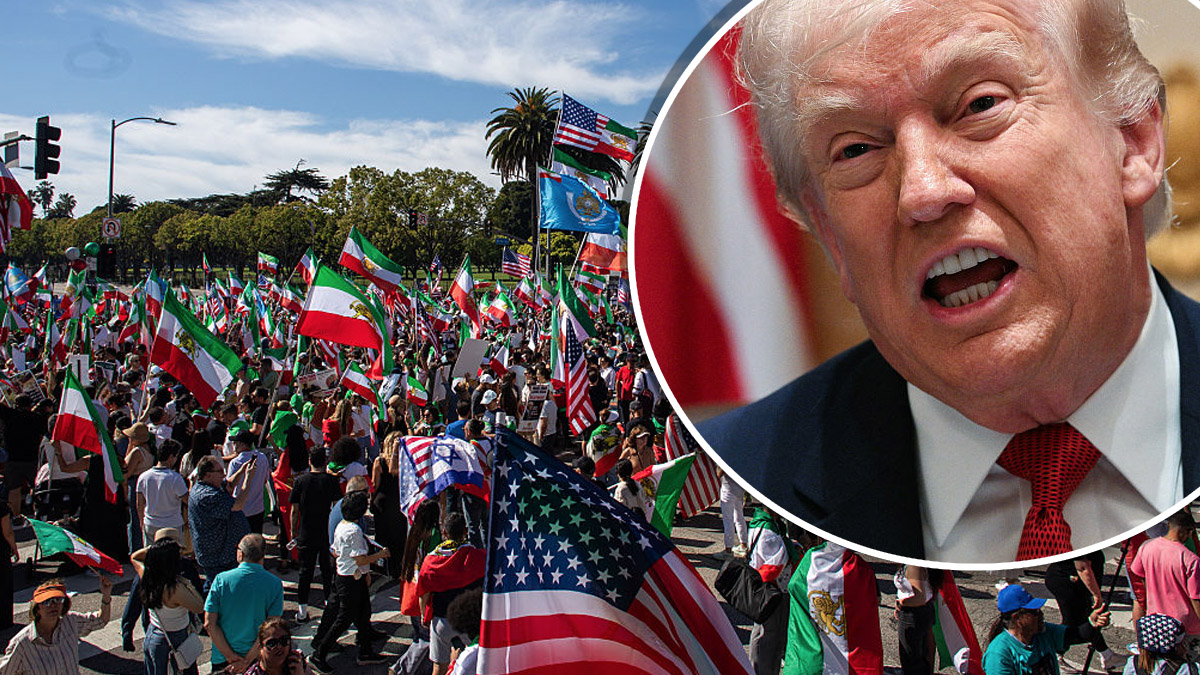
ISLAMABAD, Pakistan — President Donald Trump announced that he would no longer send U.S. envoys to Pakistan for discussions with Iran, shortly after Iran's top diplomat left Islamabad late Saturday. Trump told Fox News, 'They can call us anytime they want.' The White House had previously stated that Steve Witkoff and Jared Kushner were set to travel to Pakistan's capital to attempt to revive ceasefire negotiations. On Saturday, Trump revealed that Iranian representatives made a new negotiation offer just ten minutes after he ordered the cancellation of his special envoys' trip to Islamabad for talks with Tehran. 'They gave us (yesterday) a document that should have been better, and curiously, immediately after canceling it, within ten minutes, we received a new document that was much better,' Trump said to reporters shortly before boarding Air Force One in Florida to fly to Washington. However, Trump indicated that the latest negotiation terms presented by Iran following the cancellation of Witkoff and Kushner's trip to Pakistan were still unsatisfactory. 'They offered a lot, but not enough,' he stated without elaborating further. Iranian Foreign Minister Abbas Araghchi left Pakistan Saturday night, according to two Pakistani officials who spoke to The Associated Press on condition of anonymity as they were not authorized to speak to the media. Araghchi had met with Pakistan's army chief, Field Marshal Asim Munir, and Prime Minister Shehbaz Sharif regarding Iran's stance on negotiations, stating that Tehran would continue participating in mediation efforts 'until a result is achieved.' Iran has said the talks will be indirect. Islamabad was virtually shut down ahead of the planned discussions. Pakistan has been working to bring U.S. and Iranian officials back to the table since Trump announced an indefinite extension of the ceasefire earlier this week, responding to Islamabad's request for further diplomatic efforts. The White House announced Friday that Trump would send Witkoff and Kushner to meet with Araghchi. However, Iran's Foreign Ministry indicated that any talks would be indirect, with Pakistani officials relaying messages. The first round of talks in Pakistan, led by U.S. Vice President JD Vance, lasted over 20 hours and marked the highest-level direct negotiations between the former adversaries since the 1979 Islamic Revolution. Araghchi and Trump's envoys held hours of indirect talks in Geneva on February 27 but left without an agreement. The next day, Israel and the U.S. launched military action. Tensions persist around the Strait of Hormuz. The price of Brent crude oil, the international benchmark, remains nearly 50% higher than when the conflict began due to Iran's control over the strategic Strait of Hormuz, through which one-fifth of the world's oil passes during peacetime. Iran attacked three vessels this week, while the U.S. continues to blockade Iranian ports. Trump has ordered the military to 'shoot and kill' small boats suspected of laying mines. On Saturday, German Defense Minister Boris Pistorius announced that Germany would send minesweepers to the Mediterranean to help clear Iranian mines from the Strait of Hormuz once hostilities end. The disruption of shipments through the strait has had global trade repercussions, including impacts on the Panama Canal. Also on Saturday, Iran resumed commercial flights from Tehran's international airport for the first time since the war began two months ago. Iranian state television reported flights to Istanbul, Muscat (Oman's capital), and the Saudi city of Medina. Iran partially reopened its airspace earlier this month due to the ceasefire. Casualties rise despite ceasefires. Since the war began, authorities report at least 3,375 deaths in Iran and over 2,490 in Lebanon, where new clashes between Israel and Hezbollah erupted two days after the war started. Additionally, 23 people have died in Israel, and over a dozen in Gulf Arab states. Fifteen Israeli soldiers in Lebanon, 13 U.S. troops in the region, and six United Nations peacekeepers in southern Lebanon have also lost their lives. On Thursday, Trump announced that Israel and Lebanon had agreed to extend a ceasefire between Israel and Hezbollah for three weeks. The group has not participated in Washington-led diplomacy.
AI summary · Source: Telemundo McAllen (KTLM) →